
2. The Growing Season and Climatic Influence
“Climatic Equilibrium and Exceptional Cellaring Potential”
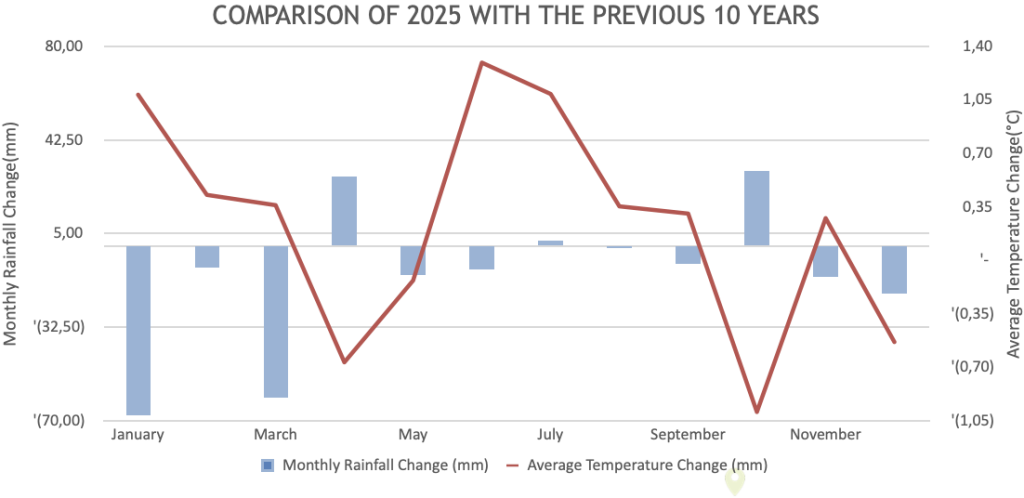
The season commenced with bud break and flowering in late March, followed by an early April frost event. While such events typically pose a theoretical yield risk of up to 30%, proactive vineyard management and our rigorous annual practice of green harvesting (cluster thinning) effectively mitigated the impact, resulting in a marginal loss of only 3%. This resilience set a positive foundation for the remainder of the vintage.
Climate data, analyzed against a 10-year baseline, shows that temperatures remained close to historical norms. The harvest took place within the anticipated window, beginning in the second week of August and concluding by the second week of October. The absence of precipitation in July and August was instrumental in minimizing disease pressure, ensuring pristine fruit health. Most notably, the pronounced diurnal temperature variation (the shift between day and night temperatures) during August and September facilitated ideal acidity retention while fostering complex aromatic and phenolic maturity.